Same Budget, Different Home: What Can You Buy for €250,000, €350,000 and €500,000 in Tallinn and Harju County?
A home-buying budget presents people with a choice: should they buy a smaller apartment in the city or a larger home outside the city limits? How much more can the same budget buy outside central Tallinn?
According to data for the second quarter of 2026, the average price per square metre of a new-build apartment in Tallinn was €4,635. Excluding Tallinn, the average price per square metre of a new apartment in Estonia was €3,205. In the secondary property market, regional differences are often even greater.
According to Janar Muttik, founder and CEO of Everaus Kinnisvara, buying a home near Tallinn is a conscious lifestyle choice for many families. “Outside the city limits, people are looking for more space, privacy and a living environment that better supports family life. Price per square metre is important, but the final decision often comes down to how well the location works for the whole family’s day-to-day logistics,” Muttik said.
€250,000: An Apartment in Tallinn, but Extras Come at a Cost
With a budget of €250,000, buyers in Tallinn’s new-build market can generally afford a compact two-room or smaller three-room apartment. In desirable locations, the choice is more limited, while a parking space and storage unit usually come at an additional cost.
In Harju County, the same budget offers considerably more flexibility. Depending on the location, buyers may be able to choose a larger apartment, a terraced house or even a plot for a detached home. “In Tallinn, families often ask what kind of apartment they can get for their money. In Harju County, however, they can start considering a private garden, a separate entrance and a home that is better suited to the everyday needs of a family with children,” Muttik explained.
€350,000: A City Apartment or a Terraced House Outside the City Limits
With a budget of €350,000, the difference becomes even more apparent. In Tallinn, this amount can buy a new apartment in a good location, while in the areas surrounding the capital, buyers can already afford a terraced house in many new developments. This means more living space, a private terrace and garden, more convenient parking and greater privacy.
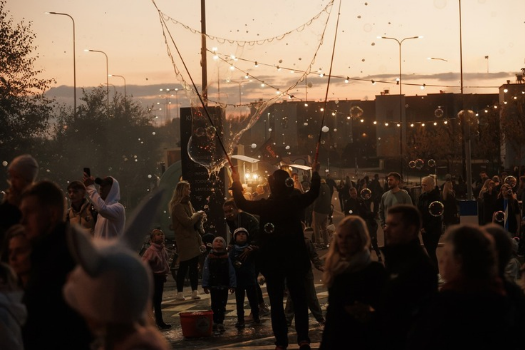
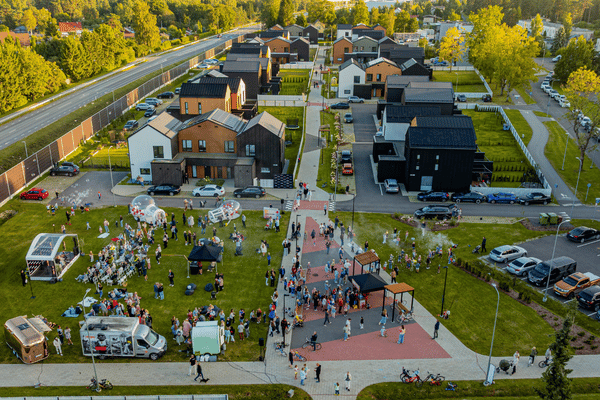
A good example is Kindluse Kodu, an Everaus Kinnisvara development in Järveküla, Rae Municipality, where the completion of the first phase was recently celebrated with a community day. The 21-hectare neighbourhood is planned to include nearly 170 new homes, with the entire area being developed as a cohesive residential environment. Residents are moving to Kindluse Kodu from Tallinn, Tartu and abroad, although the largest group consists of families already living in Rae Municipality who are looking for a larger home within a familiar area. This shows that the area is highly valued and that, when the opportunity arises, people prefer to remain there for the long term.
“We see many families moving, for example, from an apartment in Peetri or Järveküla to a more spacious home without wanting to leave the area. Their children already attend school or kindergarten here, their daily routines and logistics are established, and they do not want to reorganise their lives. In these cases, they are looking for a better home within the same well-functioning environment,” Muttik said.
At Kindluse Kodu, semi-detached houses have attracted the greatest interest. According to Muttik, the reason is that buyers experience them more like detached houses than traditional semi-detached homes. “In practical terms, they offer the functionality of a detached house because the two homes are connected only by their garages. This provides greater privacy and independence,” Muttik explained. The terraced houses have also received considerable positive feedback, particularly for their spacious, light-filled interiors and contemporary architectural solutions.
At Luige Kodud, terraced houses have attracted the most attention from buyers, as the wide variety of floor plans makes it possible to find a suitable home for very different needs and stages of life. There has also been strong interest in the apartment buildings in the Luige development, which offer an alternative to a city apartment for people who want more greenery and a quieter living environment without giving up the convenience of apartment living.
€500,000: Location in Tallinn, Space and Privacy in Harju County
With a budget of €500,000, buyers in Tallinn are often paying for location, urban convenience, views, architecture and proximity to services. In Harju County, the same price range generally provides a larger home, a more private garden, multiple parking spaces and a more flexible layout for family life.
According to Muttik, when comparing Tallinn and Harju County, families also need to consider whether the location will genuinely work for their everyday lives. A longer commute or the need for a second car can quickly reduce the advantages of having a larger home. This is why the approach to residential developments outside the city has also changed: in addition to the homes themselves, developers need to provide outdoor areas, playgrounds, walking and cycling routes, community spaces and convenient access to essential services.
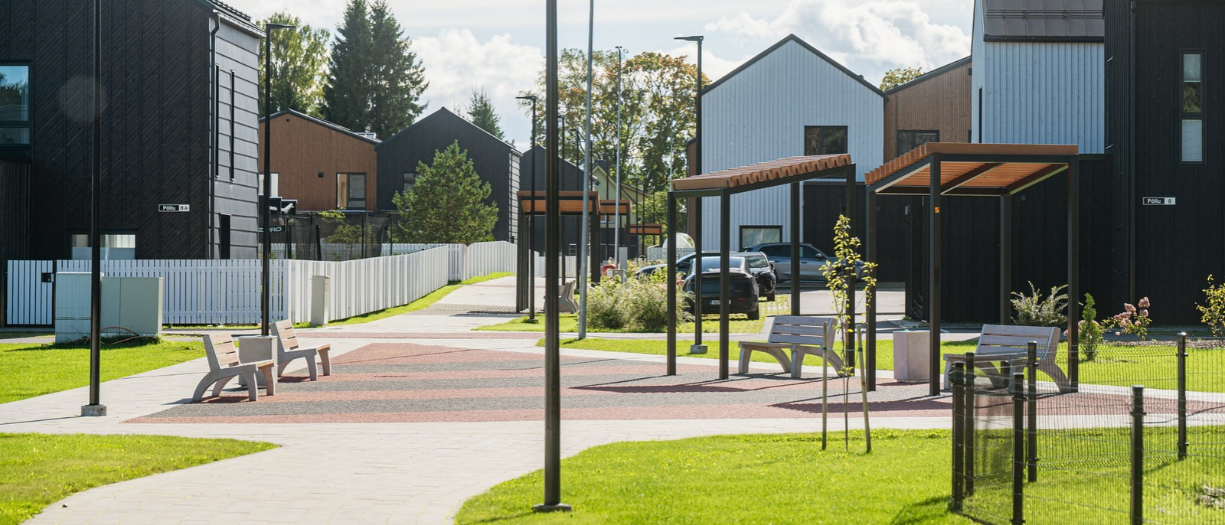
Everaus Kinnisvara has followed this principle in developments such as Kindluse Kodu in Järveküla and Luige Kodud in Kiili Municipality. At Kindluse Kodu, the emphasis is on proximity to schools, safe infrastructure and making families’ everyday logistics easier. A central feature of Luige Kodud is a landscaped promenade approximately 300 metres long, complete with recreational areas, creating a safe environment that supports an active lifestyle for families. “The idea behind a well-planned development near the city is to make it possible for as much of a family’s everyday life as possible to take place close to home. When schools, kindergartens, shops, playgrounds and recreational areas are nearby, parents do not have to deal with Tallinn’s rush-hour traffic every day,” Muttik said.
“Choosing Harju County does not necessarily mean making a compromise. If the area has all the necessary infrastructure and services, the same budget can provide a family with a considerably more complete and higher-quality everyday living environment,” Muttik added.